Matched sets before anything is listed
Physically comparable homes across the whole county, listed or not. Plus a read on which owners look absentee, and which taxing districts an address really sits in.
bremi reads every property record in the county — all 1.6 million. Ask a question in plain English. Get an answer. Nothing to build, nothing to download, nobody to wait on.


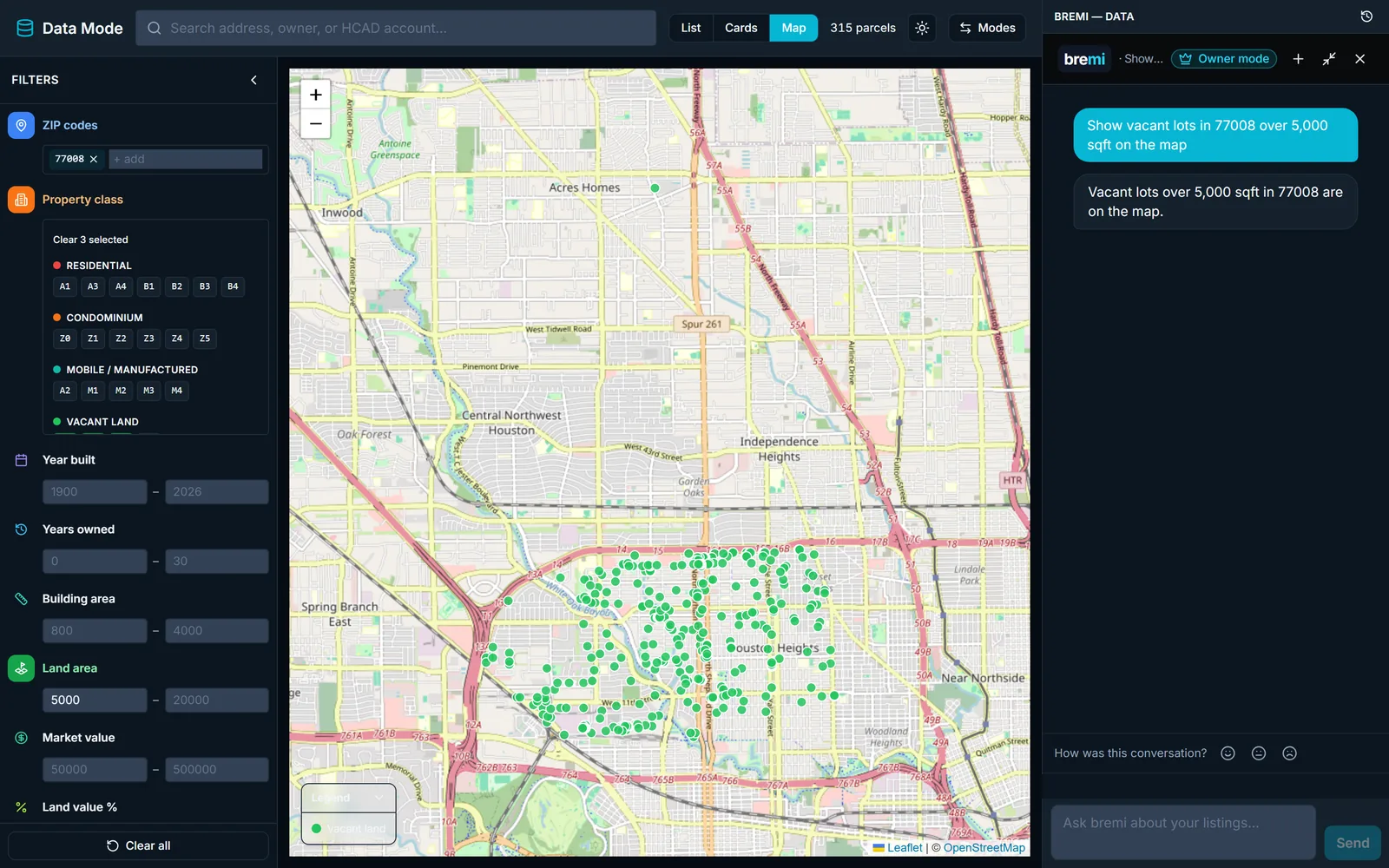
Show vacant lots in 77008 over 5,000 sqft on the map
bremiVacant lots over 5,000 sqft in 77008, on the map.
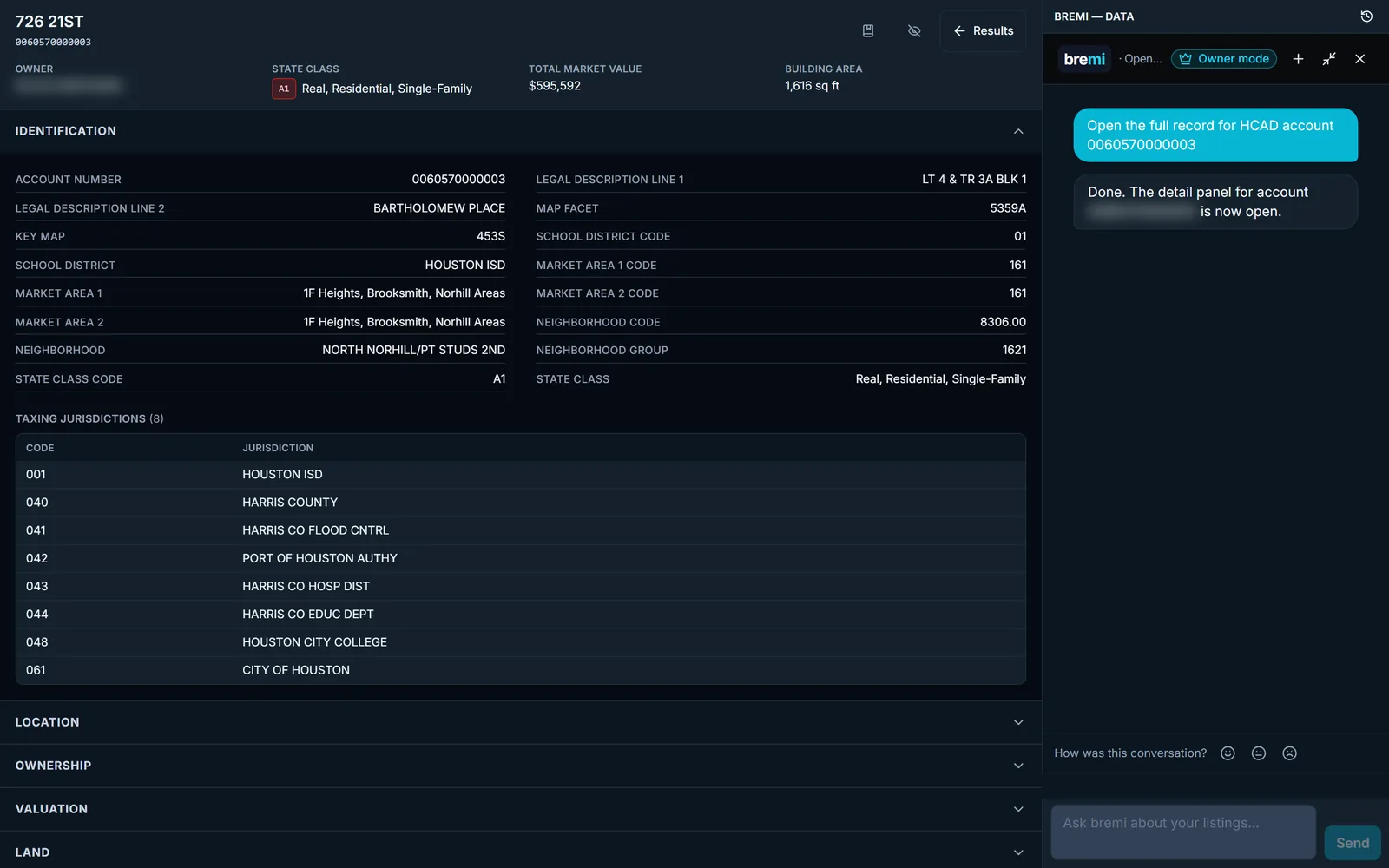
315 parcelsReal screens from the running product. Owner names blurred — public record, but this is a marketing page.
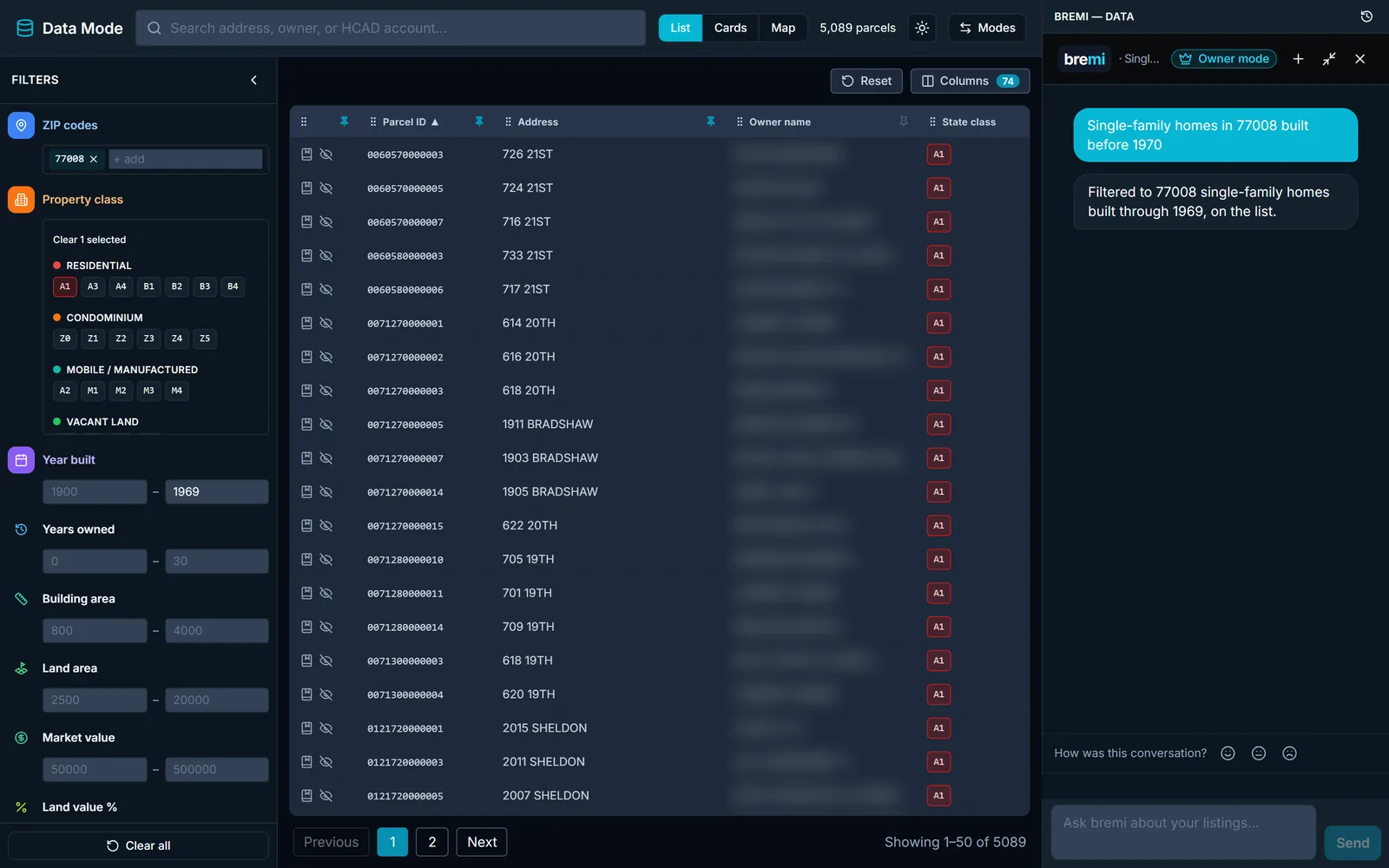
Data Mode is the front door. Nothing to set up — open it and ask. bremi turns your question into filters, moves the map, or does the maths. And it shows you every step it took, so nothing happens out of sight.
ZIP, property type, year built, size, value, homestead, absentee owner, permits, condition. The side panel shows exactly what it applied — and you can take the controls back whenever you want.
Sets the filters · switches the viewGroup by neighborhood, ZIP, city, property type or decade built. Eleven measures — how many parcels, teardowns against new builds, average values, land price per square foot.
Groups and counts parcelsAbout 1.28 million parcels carry written appraiser notes. bremi reads them by keyword and by meaning — so a search about condition comes back with properties, not paperwork.
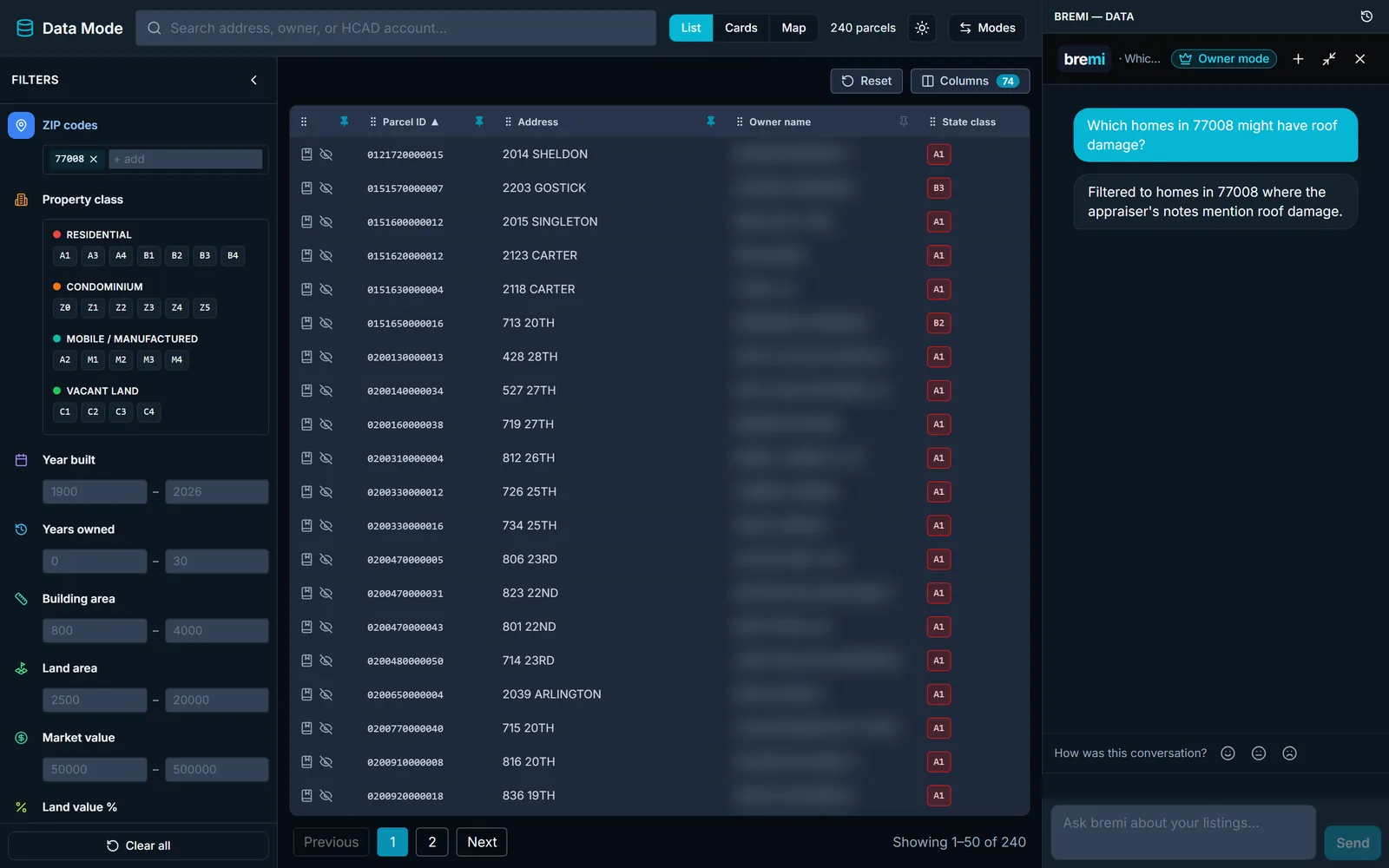
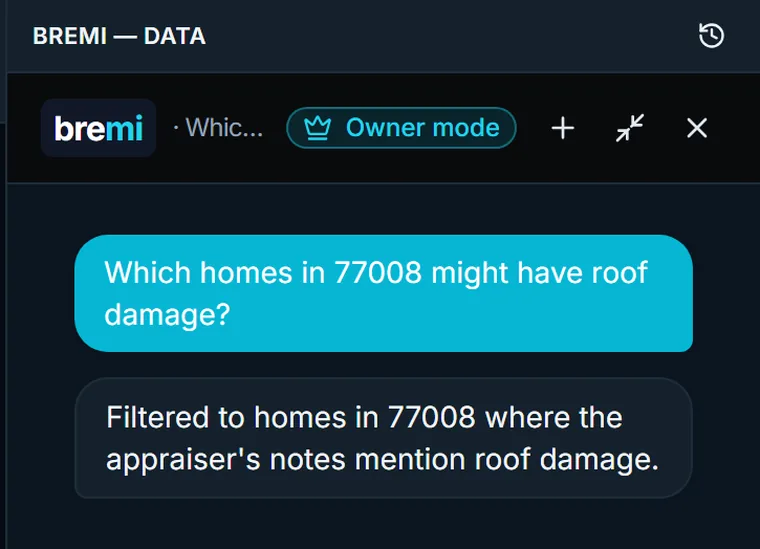
Searches note text · matches note tagsSearch roof and you get two opposite things: houses that need one, and houses that just got one. bremi tells them apart. So a roofer looking for work and a lender checking condition get different answers out of the same word.
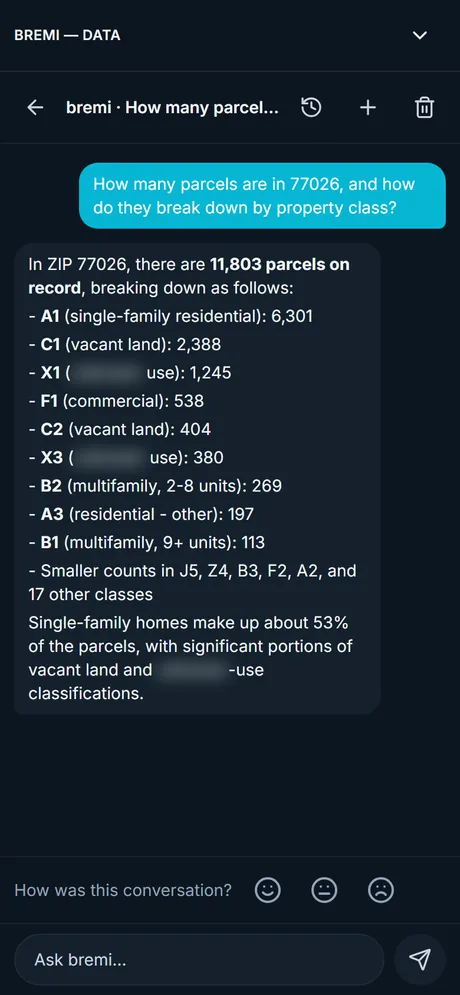
bremi sits in a panel on the right, in every mode. Ask the way you'd ask a colleague and it translates. “Might have roof damage” becomes a note tag. “Teardown” becomes land worth more than the building. “Absentee” becomes a mailing address that isn't the property.
The answer lands on the screen, not just in the chat — filters change, the view switches, the record opens. And when the records can't answer honestly, it says so rather than inventing a number.
One real, unedited round-trip.
Big platforms buy bundled data and refresh it weekly or monthly. bremi goes to each source directly and ties them together at the parcel — the part nobody can buy. One signal is noise. Several stacked is a lead.
Every count is a count of records that actually carry that field. A blank means the county didn't record it — not that the answer is no. bremi says which, instead of letting silence look like an answer.
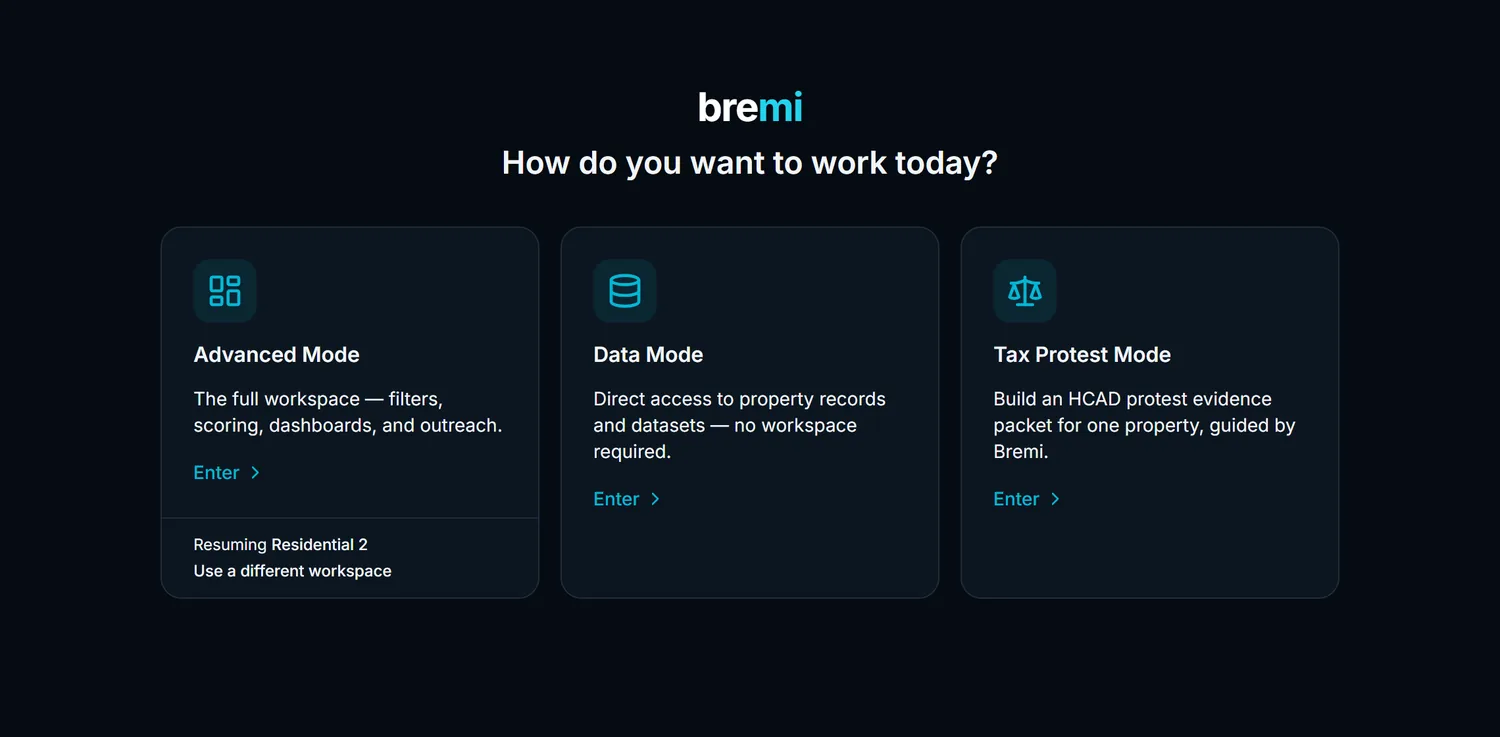
Same data underneath. Three levels of commitment on top, and you pick one on the way in. Most people start in Data Mode because it asks nothing of them. The other two exist because a question you ask every week should be saved, and one your whole team asks should become a workflow.
Direct access to property records and datasets. No workspace required — open it and ask.
Why it matters: a quick question shouldn't cost you a setup session. Your bookmarks and hidden parcels stay yours alone.
One property, one evidence packet. bremi reads the appraisal record, builds the equity grid from the district's own values, asks you for what only you know, and writes the packet.
Why it matters: the strongest protest evidence is already in the public roll; what's missing is the hours to assemble it and the words to argue it.
The full workspace — saved filters, lead scoring, dashboards, routes and outreach.
Why it matters: scoring turns a pile of signals into a ranked worklist, and a shared workspace gives your team one definition of a good lead instead of five.
A workspace holds your market — the filters, the scoring, the tiers — so everyone works the same list. From there it runs forward: score, sort, route, contact, record what happened.
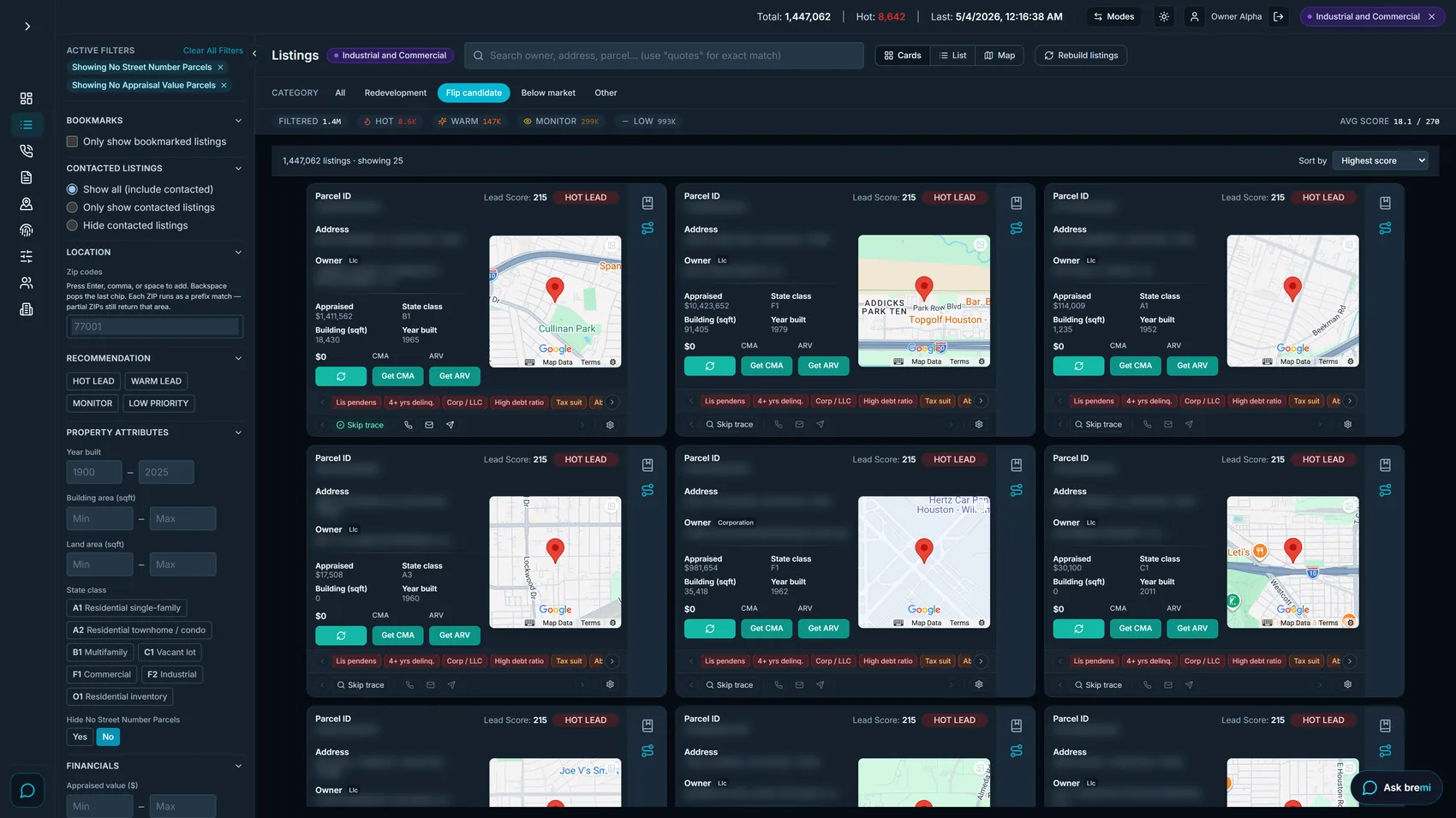
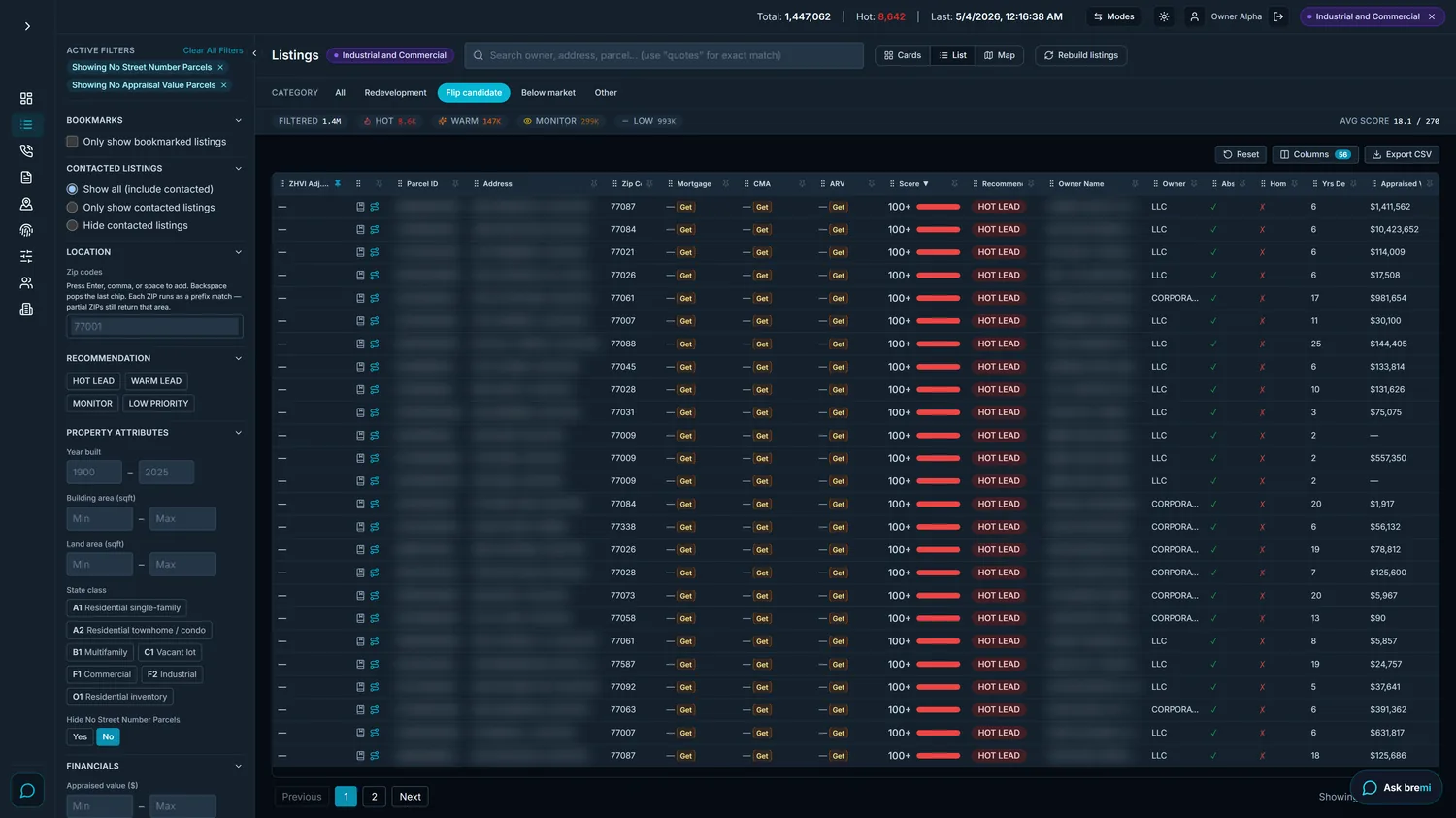
Cards carry the whole decision: score, tier, signals and every action on one face. Owner, address and parcel ID are blurred — next to the flags, together they would name a household.
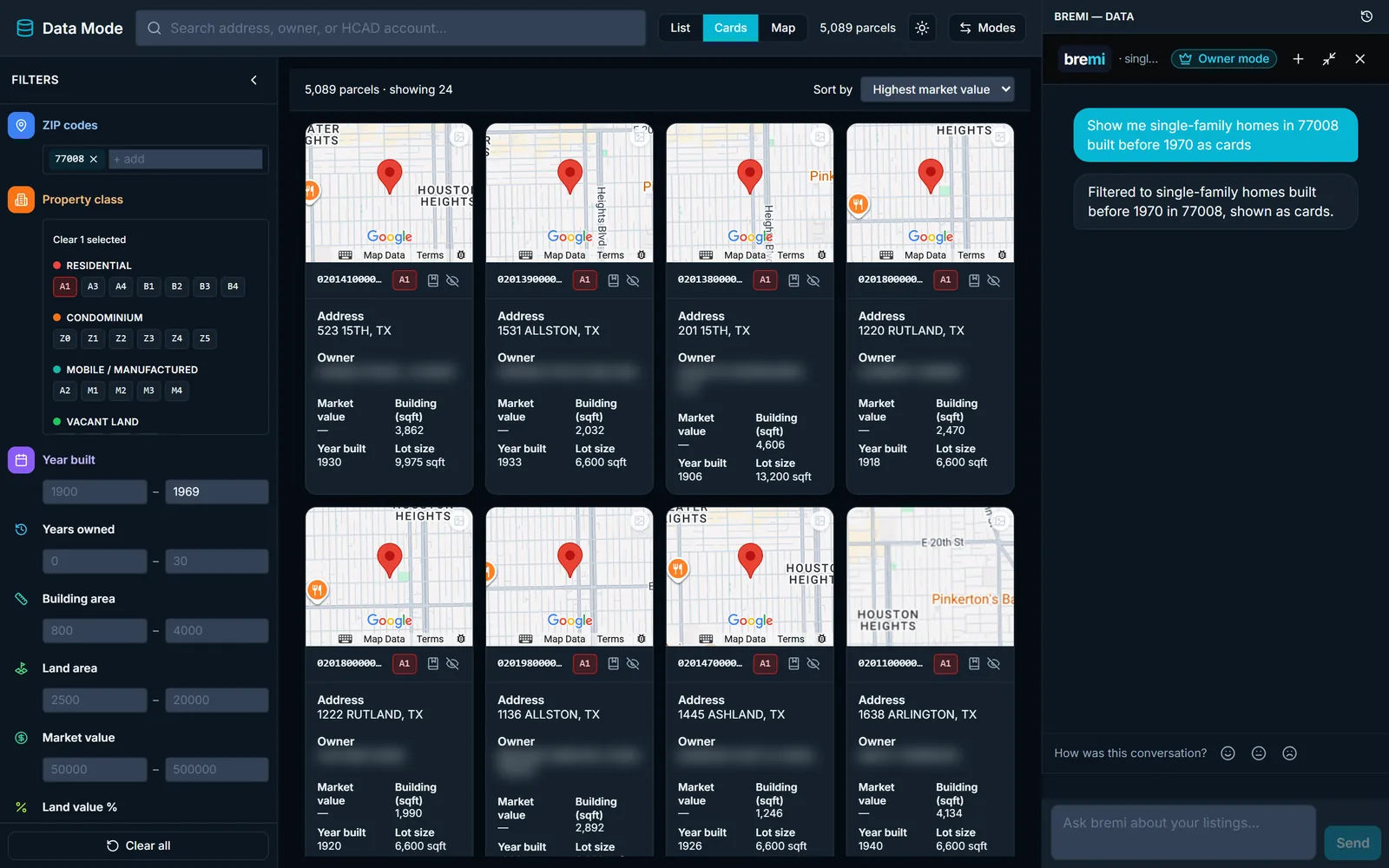
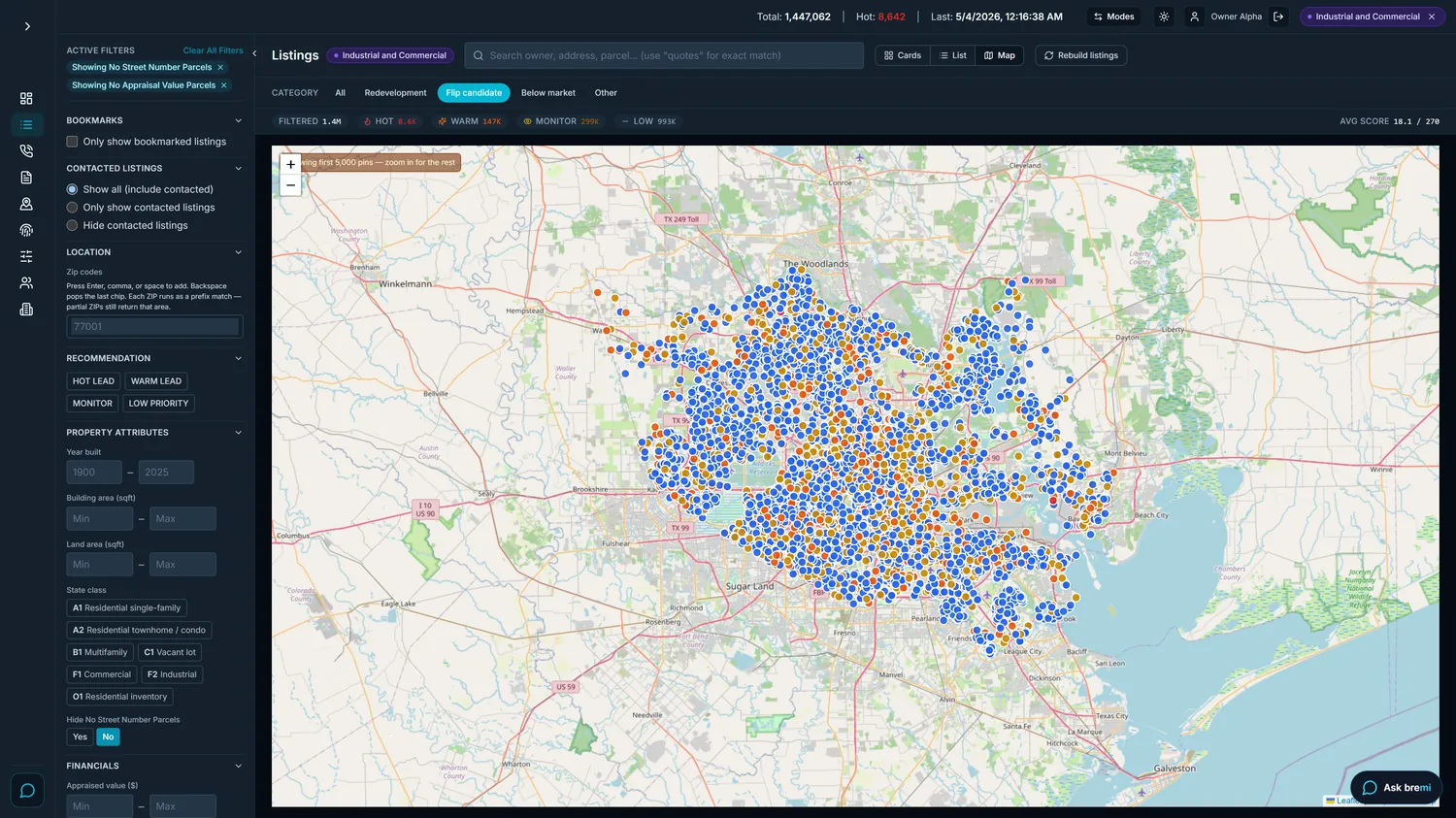
List when you're comparing dozens of rows. Cards when you're deciding one at a time. Map when the question is really where. Your filters, sort and score follow you between them.
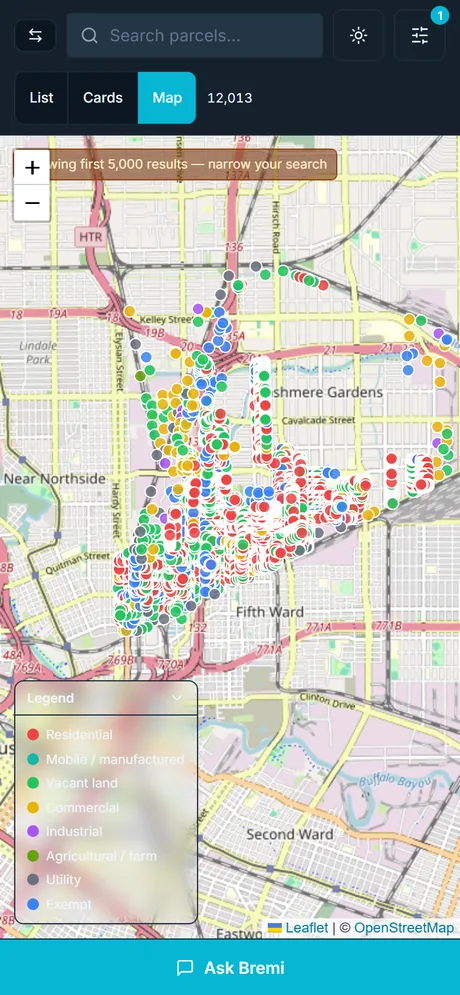
Pin colour is the tier — so a busy pocket looks busy before you've opened a single record. Pan the map and the list re-ranks with you.
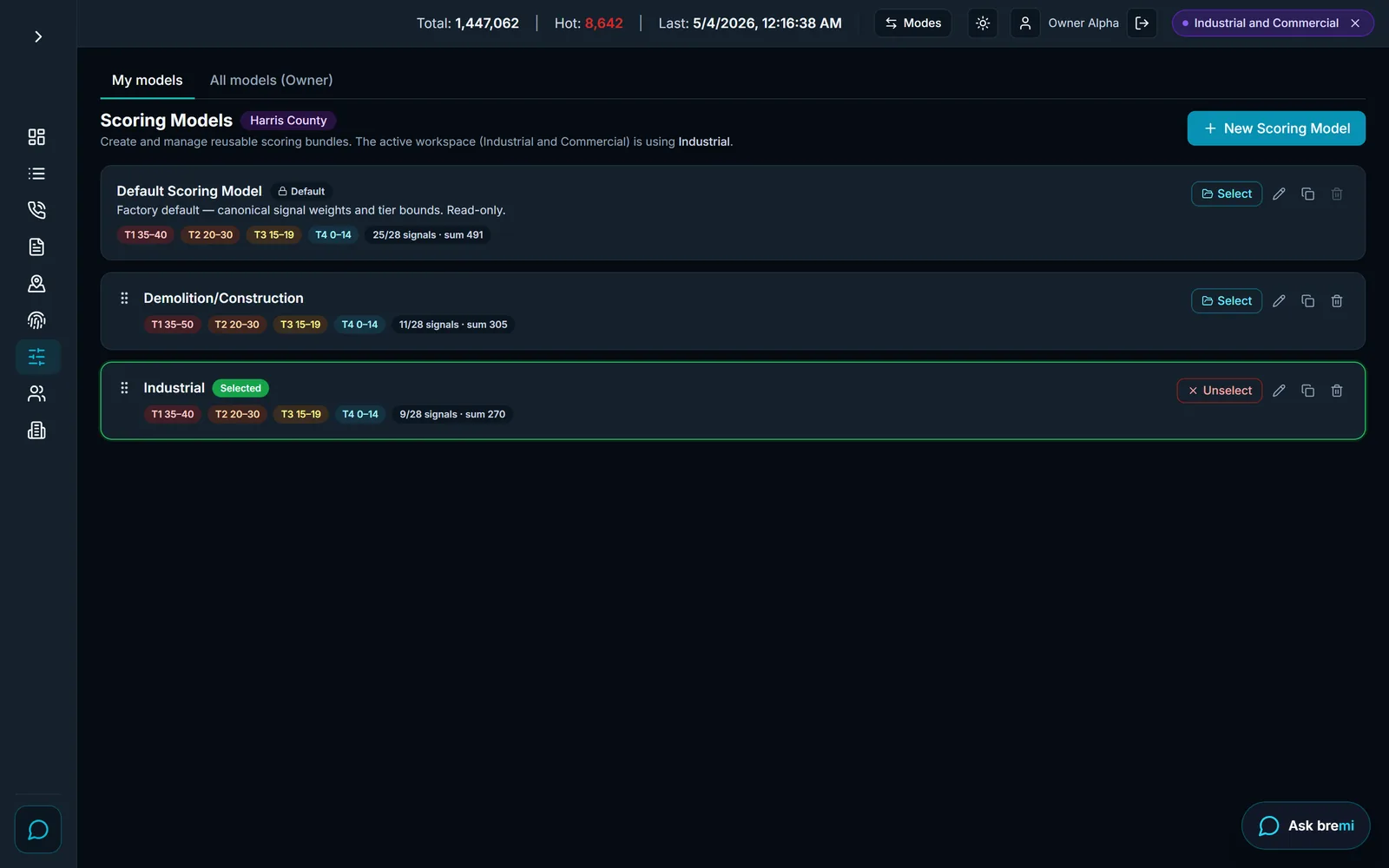
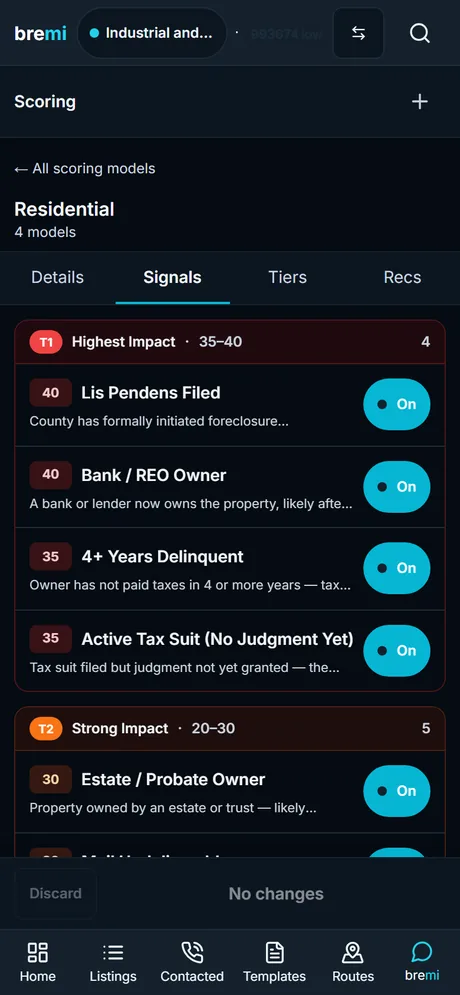
You set the weights and the tiers, per workspace. A teardown model and a rental model can run over the same county and disagree. Every score breaks down into the signals behind it, so a lead is never just a number.
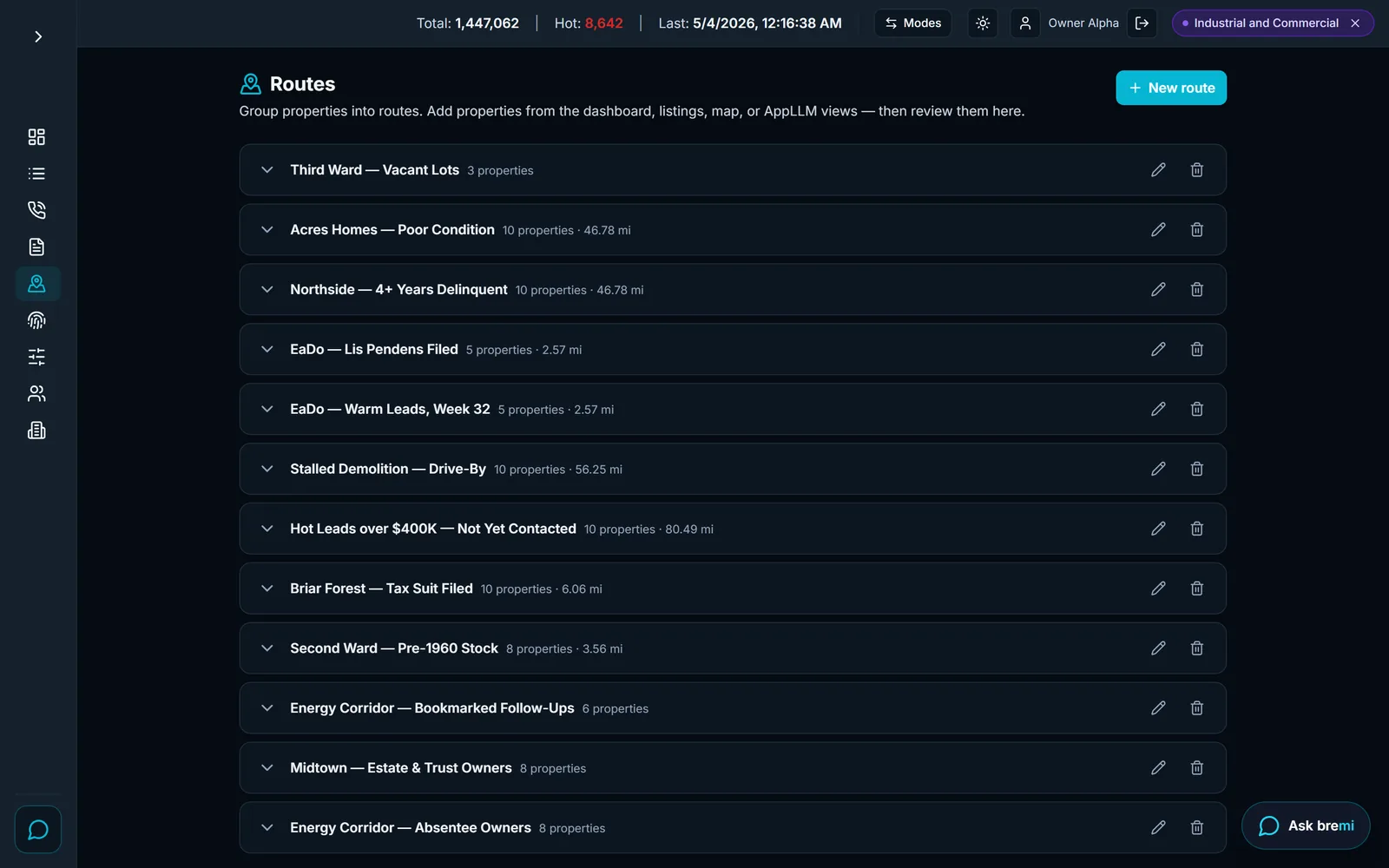
Build a route from anywhere in the app — the map, a card, a search result. Check the stops and the mileage before you get in the car.
Mail doesn't start in another tool. Pick a ready-made template — cash offer for wholesalers, storm and repair for the trades — drop in the property details, and send. You're charged per piece, because mail is the real cost here.
Calls and texts stay human-only, on purpose. Texas solicitation rules are strict enough that automating them would be a liability, not a feature.
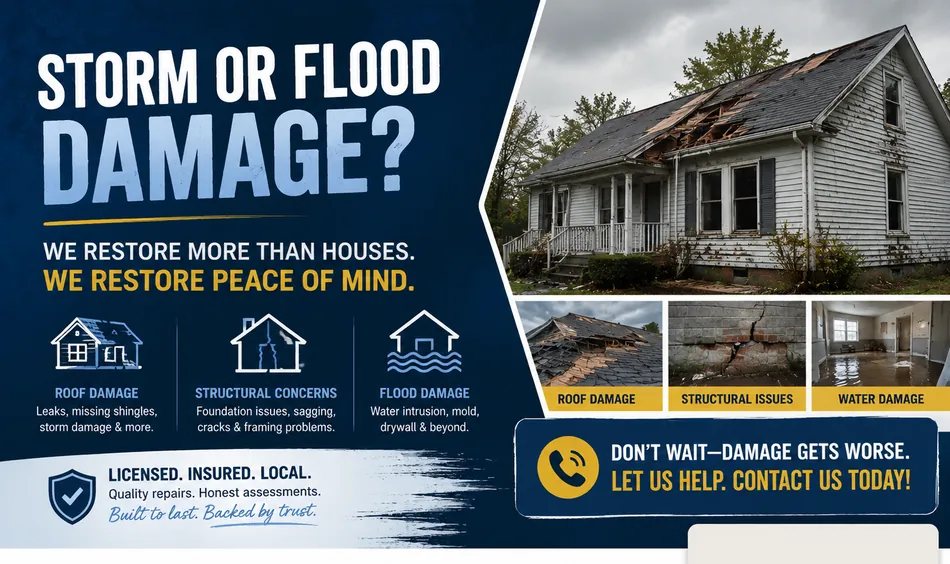
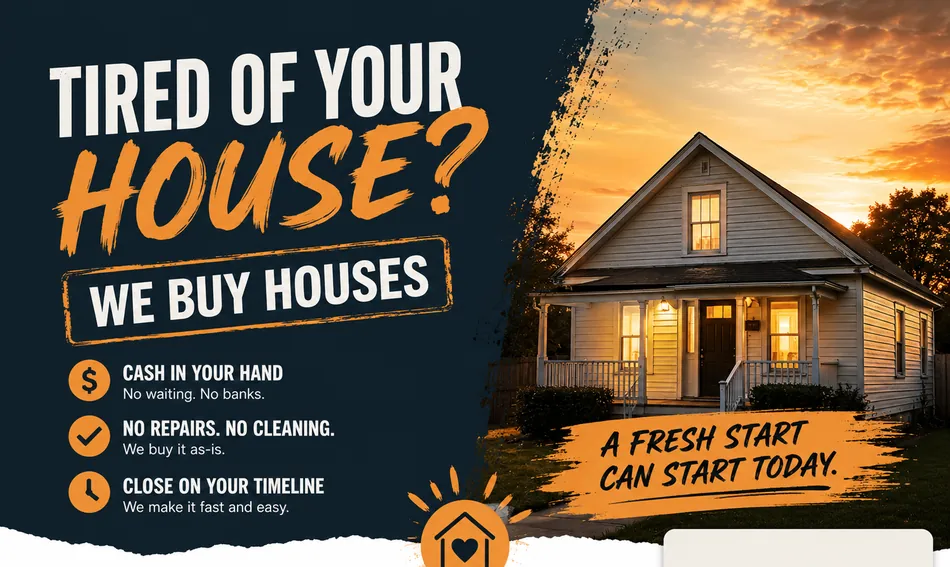
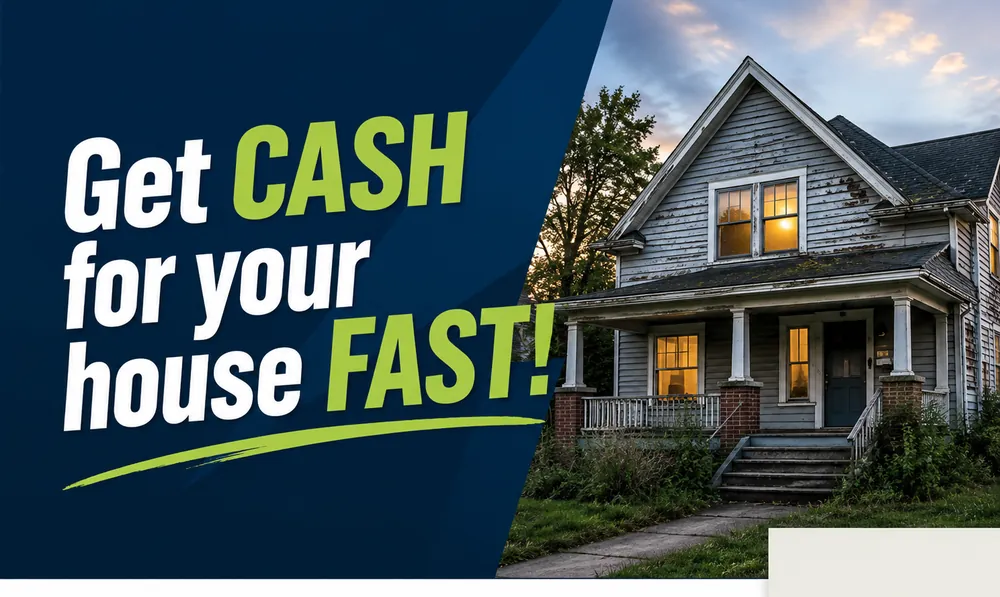
Built-in templates, unretouched.
The record matters most when you're standing in front of the house, not at your desk. So the phone build is its own build — not a desktop screen squeezed down. Everything you set up at the desk is there, and each screen gets the whole display.
The whole app Scoring, routes, mail — not a cut-down version.
The map Colour is the property class. Pan and the list follows.
bremi Ask from the truck. Same answer as the desk.
Real screens, same as everywhere else on this page.
The county describes all 1.6 million parcels in the same coded language, and reissues the whole set every year. That consistency is why these records serve work with nothing to do with buying and selling houses. Two real questions per trade:
Physically comparable homes across the whole county, listed or not. Plus a read on which owners look absentee, and which taxing districts an address really sits in.
Land worth more than the building points to underbuilt sites. Teardown and new-build permits by neighborhood show which way a block is going.
Age of the housing stock, plus recorded systems: heating, cooling, plumbing, electrical, foundation. Foundation Defect is its own recorded feature.
Construction class, outside wall, sprinkler type, condition and usefulness — plus the pools, docks and tanks you'd need to schedule or leave out.
Check type, size, year and land area against the loan file. A Poor or Unsound rating is reason to look harder before ordering an appraisal.
Match on neighborhood, property type, grade, condition, year and size — to show the district valued your property above ones it valued itself.
A tool that oversells its records costs you a wasted drive at best and a bad decision at worst. These limits live in the product, not just the fine print. bremi turns down the questions it can't answer honestly.
Texas doesn't disclose sale prices. Deeds carry a date and a document number, nothing more. Nothing here prices a house off comparable sales — that still comes from your own sold comps.
The county file ships map-grid references, not shapes. A pin is a located address, not a surveyed lot line — so “nearby” is an estimate, not a real distance.
Deed restrictions, easements, plat status and utility access live in separate recorded documents you pull yourself. Entitlement work doesn't happen in here.
You get appraised and taxable value for each taxing unit, and the parcel's share in each. Enough to size a base or argue a protest — not enough to produce or compare a tax bill.
Exemption records include categories tied to age, disability, veteran and surviving-spouse status. bremi will show them on a record you have reason to read. It will never let them be used to pick, score or build a list of people or properties. That's a fair-lending and privacy line, not a data limit.
Every county keeps its records its own way, so each one is its own build. There's no switch that turns on the rest of the country. We ranked the big metros on two things: how many people live there, and how closely their records match what bremi already reads.
reads almost like Harris usable, more work per field · the counties above hold well over 30 million people
Some states hide owner names by law. Some counties sell their records instead of publishing them. Where the data can't support the work honestly, we'd rather leave a county off the map than ship something thinner and call it coverage. If your market isn't here, tell us — demand is how we set the order.
bremi is opening to a small first group. Leave your email and tell us what you do — the trades we hear from most are the ones we build for first.
No newsletter. One email when your county opens.